


These old fashioned Christmas butter cookies are one of the recipes I come back to every holiday season without fail. The scent of them baking is magical; rich, buttery and warm, filling the kitchen with exactly the kind of aroma that makes the holidays feel special. Whether you call them Christmas butter cookies or Christmas butter biscuits, these are a holiday classic.
Old fashioned butter cookies are a simple cookie. Just four ingredients: butter, sugar, salt and flour. No eggs, no leavening, no vanilla. What you get is a clean, pure butter flavor and a texture that’s slightly crisp at the edges and just melting in the center.
These are wonderful plain, beautiful when decorated, and perfect for gifting. They also happen to be one of the easiest Christmas cookies you’ll ever make. I bet they end up on repeat every Christmas, just like they are at my house!

Why should you make my Christmas butter cookies recipe?
These old fashioned Christmas butter cookies sit somewhere between a shortbread and a classic cut-out sugar cookie. They’re less dense and buttery than my shortbread, which makes them easier to roll thinly and to cut into clean shapes. They hold their edges well during baking, which is exactly what you want for cutout cookies.
They’re perfect for cookie boxes and festive tins. They make a great companion to my gingerbread cookies — the two together are a classic combination for holiday gifting. I also use the dough as the base for sugar cookie fudge and my stained glass Christmas cookies.
Another practical bonus: the dough for these cookies can be made ahead and kept in the fridge for up to two days, or frozen for up to two months. It’s a genuinely useful recipe to have ready during the busy holiday season.
As an Amazon affiliate I earn from qualifying purchases. This post may also contain other affiliate links, which means I may earn a commission if you click through and make a purchase, at no additional cost to you.
Christmas butter cookies: ingredients and substitutions
See the recipe card further down for full method and ingredient quantities.
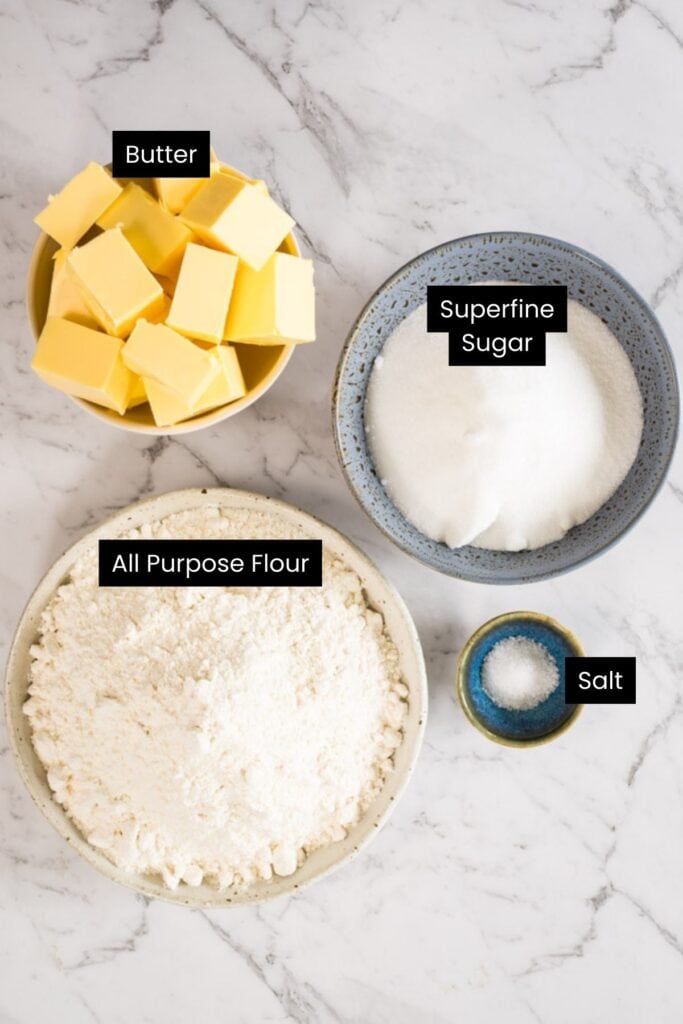
- Unsalted butter: At room temperature — this is important. Cold butter won’t cream properly. Overly soft or melted butter will cause the cookies to spread in the oven. Take it out of the fridge at least an hour before you start. Use unsalted so you can control the salt level yourself.
- Superfine sugar (caster sugar): Gives the cookies a delicate, fine-grained texture. Granulated sugar can be substituted — the cookies will have a slightly sandier texture.
- All-purpose flour (plain flour): The exact quantity needed can vary slightly depending on the size of your eggs and the moisture in your butter — when mixed, the dough should be soft but not sticky.
- Fine salt: Just a pinch. It balances the richness of the butter and brings out the flavor.
- Coarse sugar: Optional, for sprinkling on top before baking. This gives a Danish-style finish — sparkly, slightly crunchy, and very pretty.
Christmas butter cookie variations
The base dough is intentionally simple, which makes it easy to adapt.
- Vanilla butter cookies: Add 1 teaspoon of pure vanilla extract when creaming the butter and sugar. This is the most classic addition and works with any decoration.
- Lemon butter cookies: Add the finely grated zest of one lemon to the butter and sugar. Wonderful finished with a simple lemon glaze.
- Almond butter cookies: Add ½ teaspoon of almond extract for a subtle nuttiness. Particularly good paired with a drizzle of dark chocolate.
- Spiced butter cookies: Add ½ teaspoon of cinnamon and a pinch of cardamom to the flour. A warm, festive variation that needs no decoration.
- Chocolate dipped: Bake the cookies plain, let them cool completely, then dip one half in melted dark or white chocolate and set on parchment paper until firm.
How to make Christmas butter cookies
View, save and print the recipe card further down in this post; read on for the visual walk-through.


Tips for success
Butter temperature matters more than almost anything else in this recipe. Room temperature butter creams properly and produces a dough that holds its shape during baking. If your butter is too cold the dough will be crumbly and hard to roll; if it’s too warm the cookies will spread and lose their edges. You want butter that’s firm but can be squashed with a little resistance if you push it with your finger.
Roll the dough to an even thickness throughout. Uneven rolling means some cookies will be perfectly done while others are either underbaked or starting to over-color. A simple way to ensure even thickness is to place wooden dowels (or any timber offcuts of the right thickness) on either side of the dough before rolling — the pin rests on them and can’t roll the dough any thinner than their height.
Don’t overbake. Christmas butter cookies should come out of the oven looking barely golden. They’ll firm up as they cool, and a cookie that looks slightly underdone at the edges when it leaves the oven will be perfect once cooled.
Make ahead! The dough freezes beautifully for up to two months, well wrapped. Thaw overnight in the fridge, then bring to room temperature before rolling. Baked, undecorated cookies also freeze well for up to six months.
Decorating, storing and gifting
If you’d like to decorate, royal icing is the classic choice for cut-out Christmas butter cookies. Use a piping bag for detailed work, or simply drizzle for a quicker finish. Fondant and melted chocolate both work well too. If you prefer a more natural look, skip the icing and enjoy them plain or with just a coarse sugar finish.
Store in an airtight container at room temperature for up to a week. Freeze undecorated cookies for up to six months. Don’t freeze decorated cookies as the icing softens on thawing.
These cookies are one of the best edible gifts of the season. Pack them into festive tins or boxes lined with parchment paper and they’ll keep well for the recipient for several days. A tin of butter cookies alongside a tin of gingerbread is a genuinely thoughtful and generous Christmas gift.
Christmas butter cookies are the kind of baking that become a tradition. Simple enough to make every year without thinking twice, and good enough that everyone always looks forward to them.
Spread the word
If you’ve made and enjoyed this recipe (or any others on the site!), would you leave a review and rating? Reviews are incredibly helpful to other cooks, and help me understand the sorts of content you enjoy or questions you have. You can rate and review any recipe by clicking the star icons at the top of the recipe card.

Old Fashioned Christmas Butter Cookies
Ingredients
- 1 cup unsalted butter at room temperature
- 3/4 cup superfine sugar caster sugar
- ½ tsp fine salt
- 2 1/2 cups all-purpose flour plain flour, sifted
- 3 Tbsp coarse sugar optional, for sprinkling
Instructions
- Preheat oven to 300°F/150°C, conventional setting (no steam!). Line a couple of cookie sheets or baking trays with parchment and set aside.
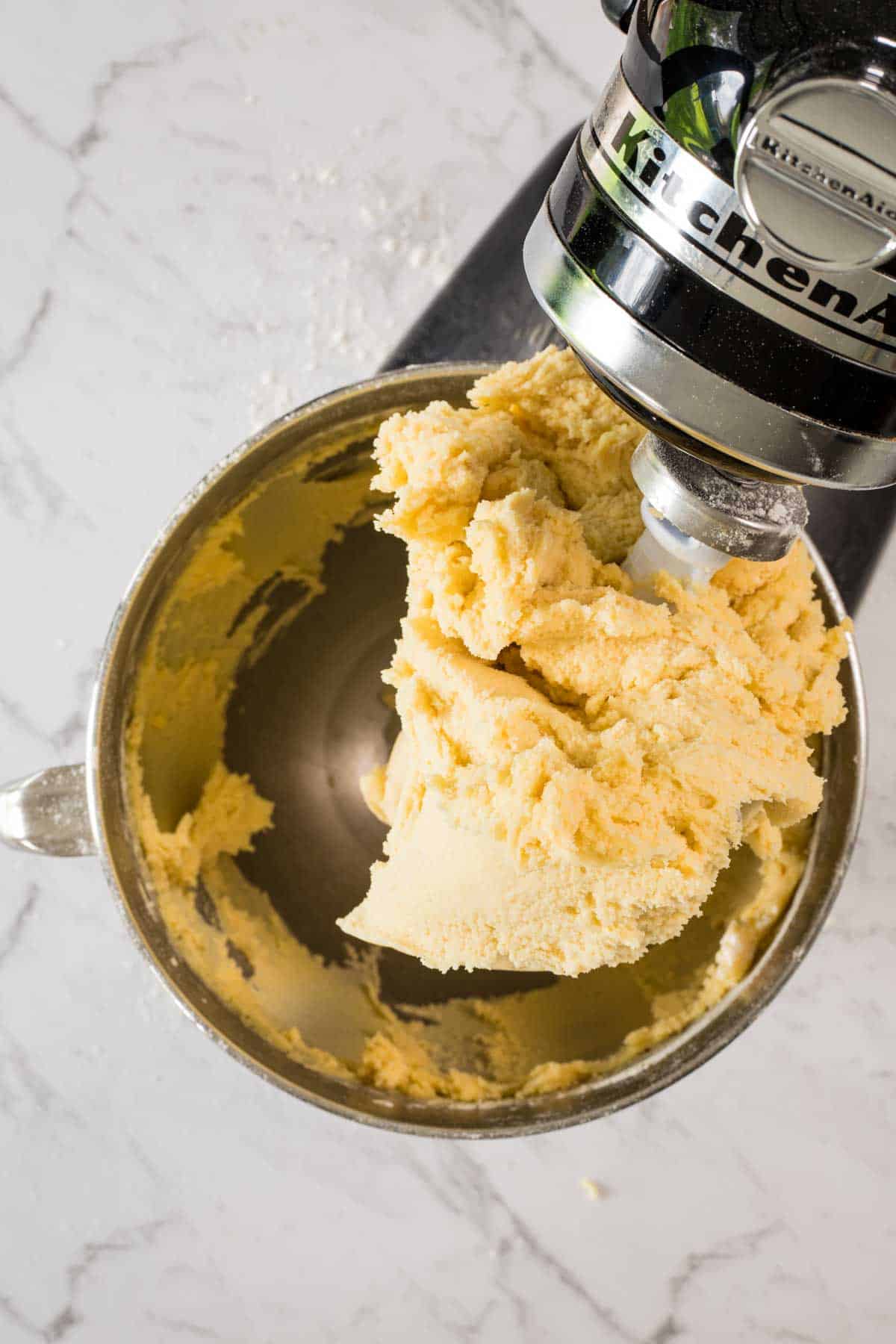
- Put the butter, sugar and salt into the bowl of a stand mixer fitted with the paddle attachment and beat on medium speed until it's soft and creamy (you don't need to beat the butter until it's really fluffy, as this will make your cookies spread and be too delicate). The time this takes can vary depending on how soft your butter is, and how strong your mixer is. It takes 2-3 minutes in my KitchenAid.1 cup unsalted butter, 3/4 cup superfine sugar, ½ tsp fine salt
- While the butter and sugar are creaming, sieve the all-purpose/plain flour into a bowl.2 1/2 cups all-purpose flour
- Add 3/4 of the flour to the butter mixture, mixing on low speed to combine. You're looking for a soft but cohesive mass; not too crumbly but not greasy and squishy either. If needed, add the last 1/4 of the flour a spoonful at a time until you get the right consistency.2 1/2 cups all-purpose flour
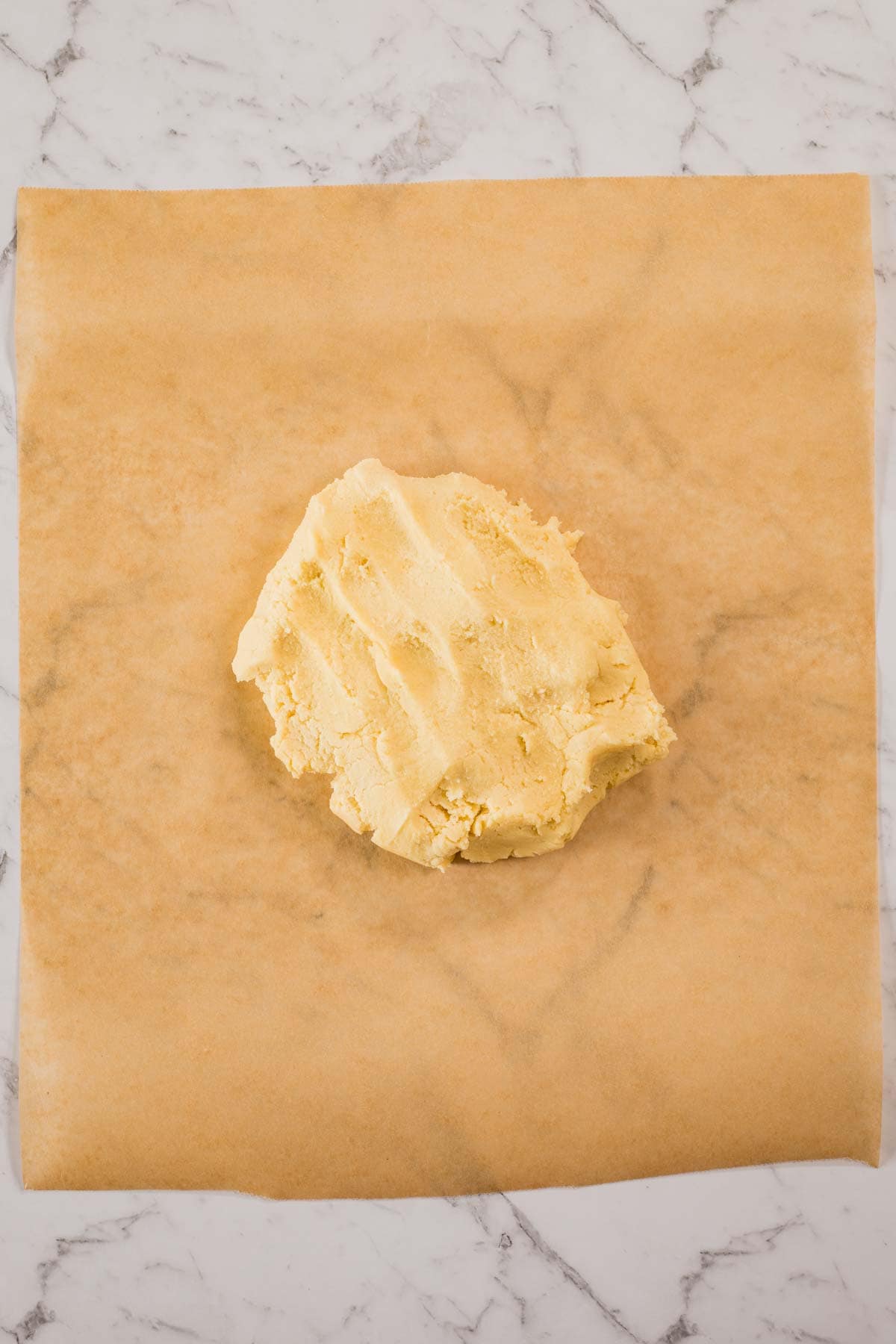
- When the flour has been added and the dough just comes together, turn it onto a lightly floured surface and knead lightly just until it’s smooth.
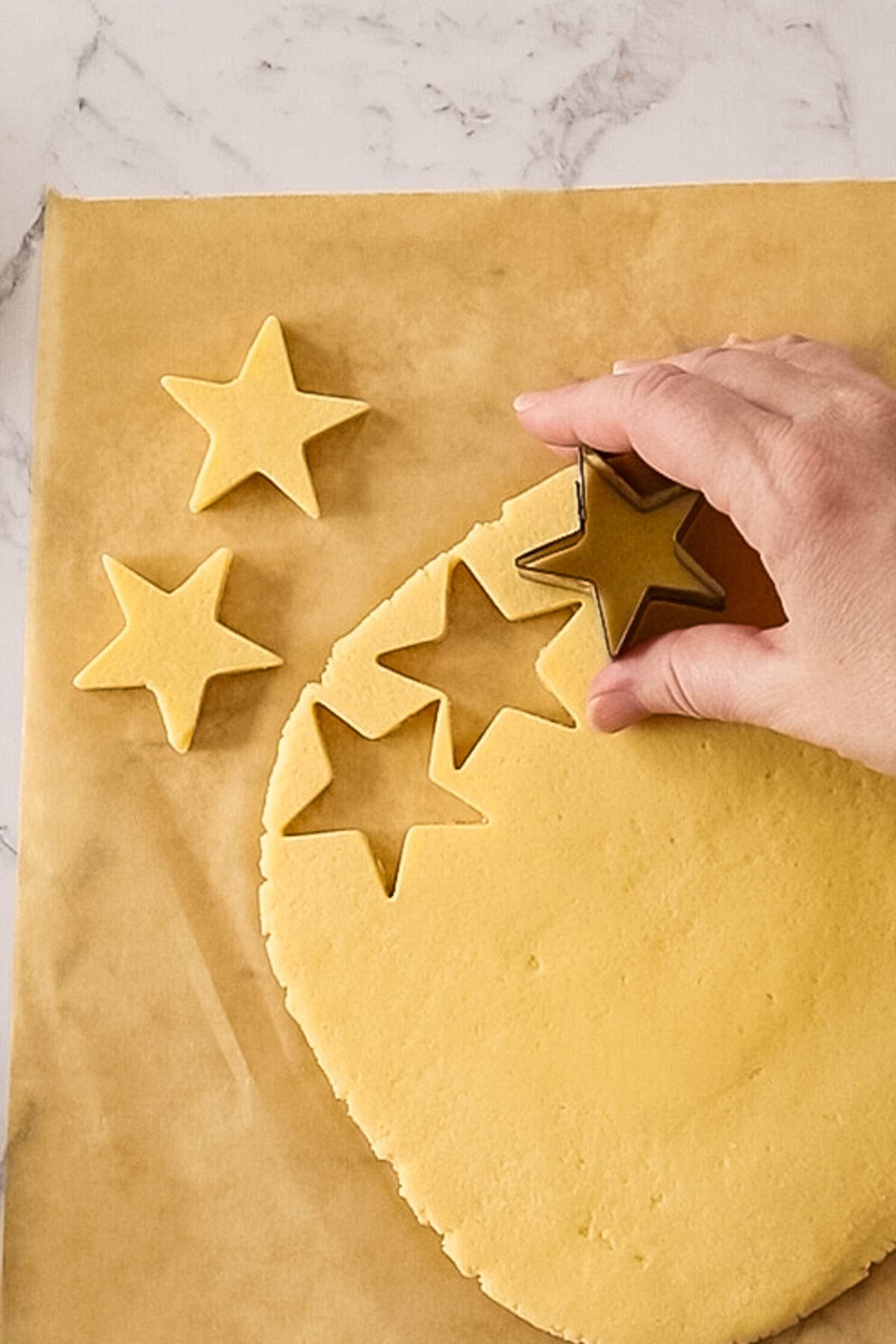
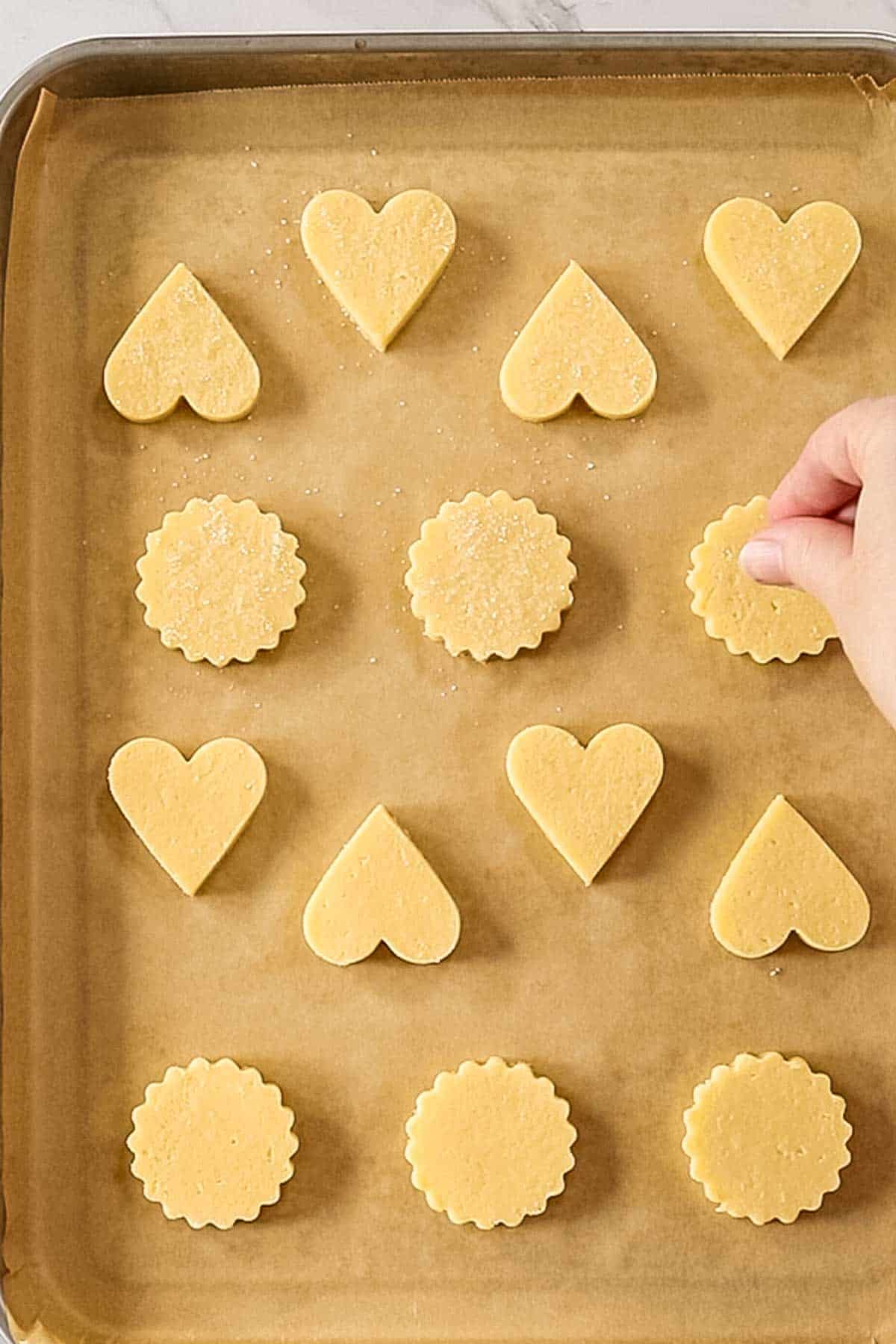
- For cut-out cookies or stamped cookies, roll portions of dough out between two sheets of parchment paper to your desired thickness. I like larger shapes to be about 3/8"/1cm thick and smaller shapes 1/2"/6mm thick. Remove the top sheet of parchment and either cut out or stamp cookies. If you're finding the dough is too soft to cut clean shapes, refrigerate it for 15 minutes before cutting.
- Place cut out shapes on lined trays, leaving ½”/1½ cm between each cookie. If you want traditional Danish-style butter cookies, brush a little egg wash or water on the cookies and sprinkle with coarse sugar crystals.3 Tbsp coarse sugar
- Bake the butter cookies until firm to the touch and just beginning to color at the edges. This can take anywhere from 15-25 minutes, depending on their size.
- Cool the cookies on the baking trays for 5 minutes, then transfer to a cooling rack. When completely cool, store in an airtight container. If you haven't sprinkled them with sugar, these cookies can be decorated with royal icing or fondant.
Notes
- The number of cookies this recipe makes will vary depending on the size and shapes of cutters you choose. The quantity here makes about two dozen medium sized cookies for me.
- Butter cookies will keep for about a week, sealed at room temperature, or can be frozen, undecorated, for up to 6 months if well wrapped.
- If you plan to decorate your cookies, do not freeze them after decorating as they can turn soft when thawed.






2 Responses
I have not made this recipe with gluten free flour so I can’t say for sure. I would give a small batch a go (perhaps a half quantity?) just to check that they work ok before going all in on a full batch.
Hello, I’m a newbie around here . I look forward to baking these cookies . Just wondering if they will also work with gluten free flour . Thank you 🥰
Seffie H .