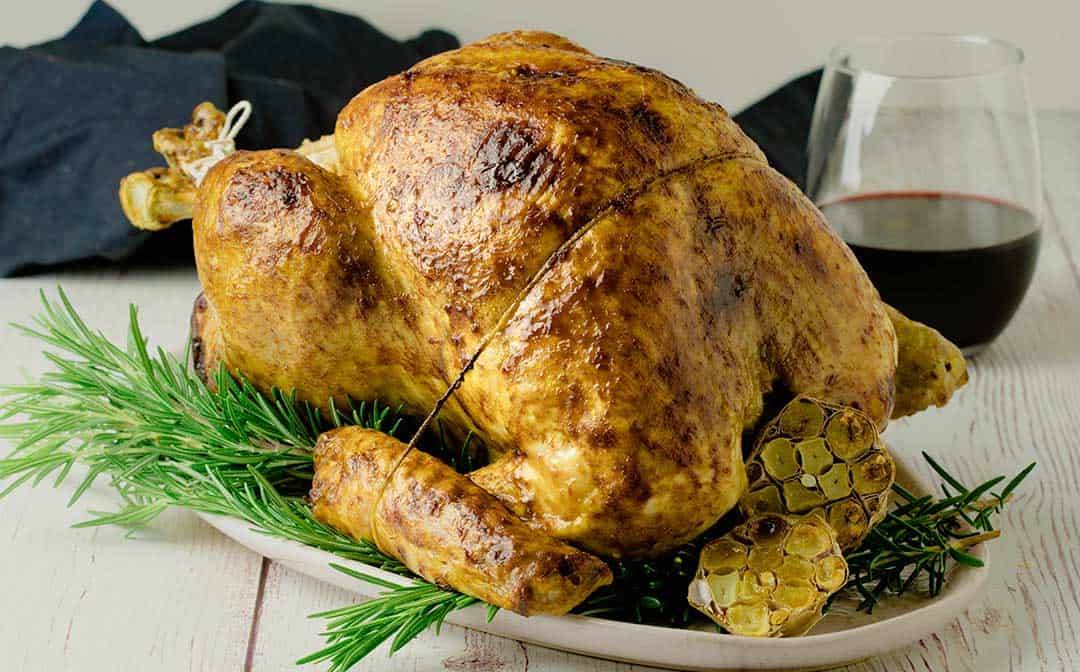


Steam oven roast turkey is one of the most impressive things you can put on a Thanksgiving or Christmas table — and this method makes it more reliable, more forgiving, and considerably faster than conventional roasting. The technique is a two-step process: a gentle steam phase first, followed by a hot dry roast to cook through and crisp the skin. The result is turkey that’s deeply juicy throughout, with a beautifully glazed, mahogany-brown exterior.
The maple glaze here is one I’ve been using for years. It gives the skin a gorgeous color and a balance of sweet and savory that’s hard to argue with. You can substitute your own favorite glaze without changing the method at all.
I’ll confess that I don’t actually roast a whole turkey very often at Christmas. Australian Christmases tend to be extremely hot, and the idea of a large bird heating the house all day doesn’t appeal! But for many of you in the Northern Hemisphere it’s a crucial Thanksgiving and Christmas tradition. I know from roasting many turkeys for Christmas in July (when it is actually winter here!) that this method consistently delivers amazing results that make the effort worthwhile.
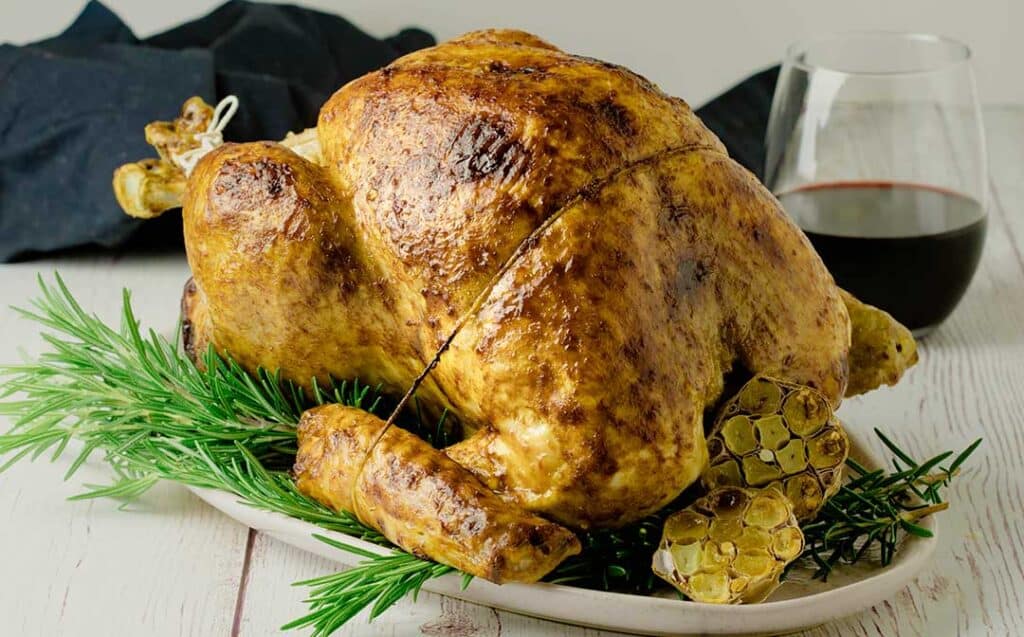
Why steam oven roast turkey works so well
Turkey is not chicken
This sounds obvious, but it matters. When a turkey arrives in your kitchen ready to cook, it might look like an oversized chicken. The cooking behavior is quite different, though.
Turkey meat is denser and more fibrous. It’s notoriously difficult to keep moist, particularly the white breast meat. In a conventional oven, the breast is fully cooked well before the dark leg meat. The larger the bird, the more pronounced this problem becomes.
The steaming phase in this recipe addresses that directly. Steaming the turkey gently at a low temperature keeps the breast moist, while the dark meat begins to cook through. By the time the bird goes into the higher dry heat for roasting, it’s already close to being evenly cooked throughout, and you end up with juicy meat all over, even in the breast.
Steam oven turkey cooks faster
If you’ve been using a steam oven for any length of time, you’ll know it significantly cuts cooking times. An 11 pound (5kg) turkey cooked on a straight combi steam setting can be done in just over an hour. Yep, less than half the conventional time.
This method, which uses steam then dry heat, doesn’t cut down on time quite as dramatically, but it produces the best results. You’ll still save around a third of the conventional roasting time, though. That’s significant when you’re managing a whole festive meal and oven space is at a premium.
As an Amazon affiliate I earn from qualifying purchases. This post may also contain other affiliate links, which means I may earn a commission if you click through and make a purchase, at no additional cost to you.
Temperature is everything when roasting turkey
This cannot be overstated. The single most reliable way to cook perfect turkey — in any oven — is to cook to internal temperature rather than to a fixed time.
Cooking times vary between oven models. Humidity levels, temperature accuracy and oven size all affect how long a given bird will take. Time is a guide; temperature is the goal.
You want the thickest part of the turkey — the meat between the breast and thigh — to reach 163–169°F (73–76°C) when you pull it from the oven. As it rests, the temperature will rise to around 180–185°F (82–85°C). That’s perfectly cooked turkey. An instant-read thermometer is not optional for this recipe — it’s essential.
Steam oven roast turkey: ingredients and substitutions
See the recipe card further down for full method and ingredient quantities.
- Turkey: The recipe is written for a 9lb (4kg) bird. This size fits in most compact steam ovens and serves around 8 people generously. You can go up to around 15lb (7kg) in a compact oven but you’ll need a full-sized steam oven for anything larger. Adjust the steaming time for a larger bird: increase to 1 hour for birds over 15lb. A fresh, free-range or organic turkey will give noticeably better flavor and texture than an intensively farmed one. It’s worth the extra cost for a special occasion.
- Salt: Used to season the skin and cavity before steaming. Be generous — salt on the outside of a well-steamed bird draws moisture back in rather than out, and the flavor improvement is significant.
- Butter: Softened, rubbed all over the outside of the turkey at the start of the roasting phase. It contributes to browning and flavor in the pan drippings.
- Maple syrup: Use real maple syrup, not imitation. It’s the backbone of the glaze and the flavor difference is significant.
- Dijon mustard: Adds sharpness and depth to balance the sweetness of the maple.
- Cider vinegar: Just a small amount, to brighten the glaze and prevent it from being too sweet.
- Garlic powder and smoked paprika: The savory and smoky elements of the glaze. Together they give the skin its deep, burnished color.
- Cayenne pepper: Optional. Adds a gentle background heat that balances the maple. Leave it out for a more family-friendly result.
- Aromatics (optional): Carrots, celery and onion can be placed in the pan alongside or under the turkey during the roasting phase. They add flavor to the drippings and make a better base for gravy.
Steam oven turkey variations
- Alternative glaze: Substitute your own favorite turkey glaze without changing the method. Herb butter, honey mustard, or a simple garlic and thyme butter all work beautifully with this technique.
- Steam-only oven: If you have a steam-only oven rather than a combi steam, complete the steaming phase as directed, then transfer the turkey to a conventional oven preheated to 350°F (180°C) for the roasting phase.
How to roast turkey in a steam oven – step by step
View, save and print the recipe card further down in this post; read on for the visual walk-through.
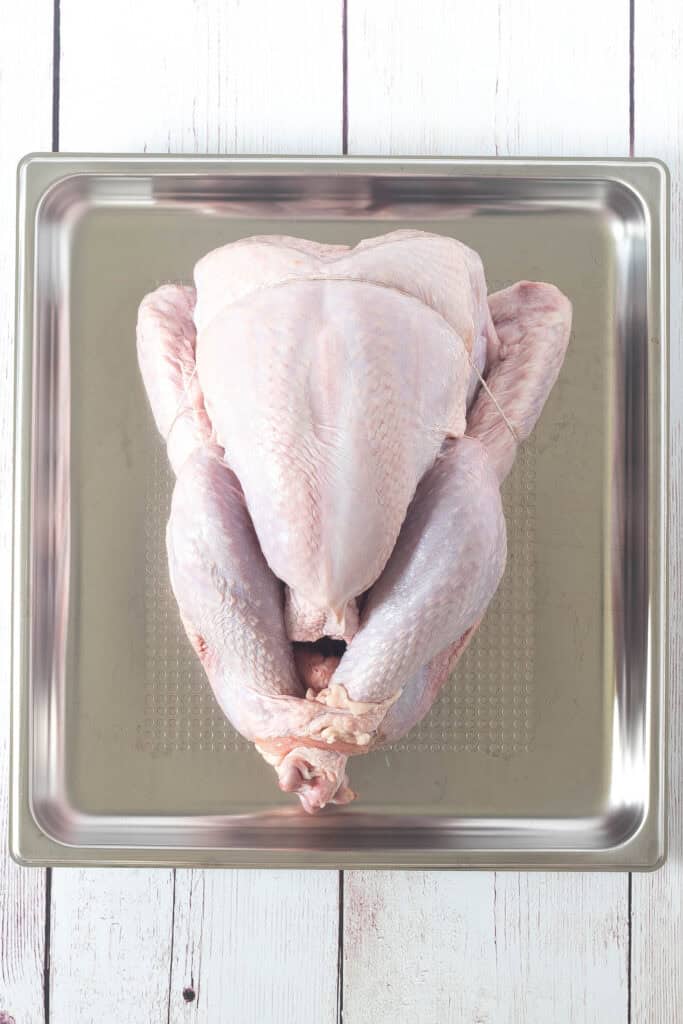
1. Prepare the turkey
Remove giblets and neck from the cavity. Pat the turkey skin thoroughly dry with paper towels. Rub salt generously all over the outside and inside the cavity — use about a tablespoon of fine salt for a 9lb bird. Tie the legs together with kitchen twine, then tuck the wings under the body and secure with another piece of twine to keep everything neat and compact.
2. Steam the turkey
Place the prepared turkey on a wire rack or perforated tray, with a solid pan underneath to catch drippings. Put it in the oven on the steam-only setting. A cold start is fine here. Steam for 40 minutes. The turkey won’t look or smell particularly appealing at this point — that changes in the next step.
3. Make the glaze
While the turkey steams, whisk together the maple syrup, Dijon mustard, cider vinegar, garlic powder, smoked paprika and cayenne (if using). Set aside.

4. Roast the turkey
Remove the turkey from the oven. Change the oven setting for the roasting phase. If you’re transferring to a conventional oven instead, preheat it to the same temperature. Rub the steamed turkey all over with the softened butter, then return it to the oven. Roast for 30 minutes, then brush generously with the glaze. Continue roasting, applying more glaze every 15 minutes, until the thickest part of the thigh meat reaches 163–169°F (73–76°C) on an instant-read thermometer. Total roasting time is typically 1½ to 2 hours depending on the size of the bird.
5. Rest the turkey
Remove from the oven and move to a warm spot to rest for at least 30 minutes before carving. Cover with a sheet of parchment paper (baking paper) topped with a clean dish towel — this keeps the heat in while allowing airflow, preventing the skin from steaming under foil.
Tips for success
Use a thermometer, not a timer. Ovens vary. Turkey sizes vary. The only reliable way to know when the bird is done is an internal temperature reading of 163–169°F (73–76°C) in the thickest part of the thigh. Start checking around the 1½ hour mark of the roasting phase.
Don’t stuff the turkey for a steam oven roast turkey. The stuffing is unlikely to reach a food-safe internal temperature during the steaming phase, and by the time it does in the roasting phase, the meat will be overcooked. Cook stuffing separately in a baking dish; it’s easier, safer and just as delicious.
If the skin is browning too fast, tent a piece of foil loosely over the top of the turkey. Check every 15 minutes and remove the foil for the final 20 minutes to re-crisp the skin.
If the pan drippings are starting to burn or smoke, add half a cup of water and check regularly. The drippings are valuable — they make the base of an excellent gravy.
Add aromatics if you want better gravy. A rough chop of carrot, celery and onion placed around the turkey during the roasting phase will enrich the pan drippings significantly. Remove before serving.
Consider your oven’s cleaning function. Turkey is a messy roast. If your conventional oven has a pyrolytic self-cleaning function, it’s worth transferring the turkey there for the roasting phase. The cleanup is far easier than dealing with a steam oven splattered with maple glaze and fat!
Don’t skip the resting of the cooked bird. Thirty minutes minimum. The temperature continues to rise during this time and the juices redistribute through the meat. Carving too soon makes a significant difference to how juicy the finished turkey is.
Serving suggestions
The pan drippings from this turkey make an excellent light sauce or the base for a proper gravy. Strain them into a small saucepan, skim off the excess fat if needed, and either serve as is or thicken with a little cornstarch (cornflour) mixed with cold water.
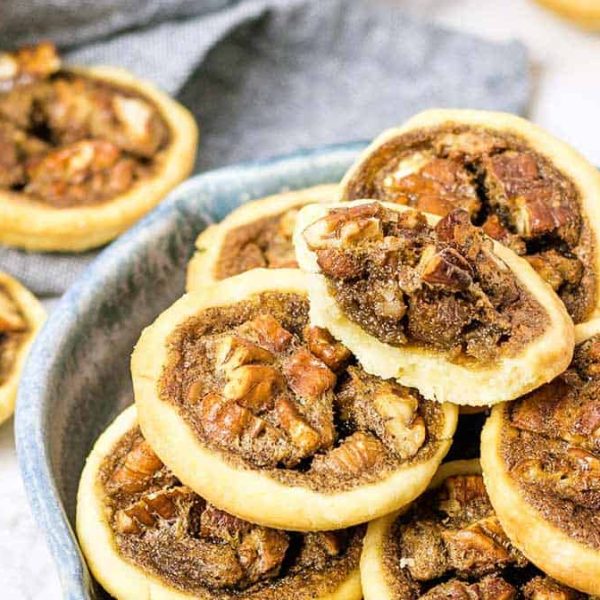
If you’re building a full Thanksgiving or Christmas spread around this turkey, I’ve got plenty of beautiful recipes to draw from! Sausage and herb stuffing is a natural partner. It’s pan-baked rather than stuffed inside the bird, which is actually the better option for both flavor and food safety. Easy potato rolls are wonderful on the table alongside, and a brussels sprouts casserole rounds out the vegetables beautifully for anyone who wants something a little more substantial than plain roasted greens. For dessert, mini pecan pies are a crowd-pleasing Thanksgiving classic, and individual steamed Christmas puddings are the natural finish to a traditional Christmas meal. And, if a whole roasted bird feels like more than you need, my sous vide turkey breast with herbs and garlic is a wonderful alternative – significantly less effort with equally impressive results.
Leftovers keep well, refrigerated for up to three days. Cold steam oven turkey is exceptionally good – it’s far more moist than conventionally roasted turkey, and makes excellent sandwiches, salads and soups.

Frequently asked questions about steam oven turkey
Can you stuff a turkey cooked using this method?
I’d advise against it. During the steaming phase, the cavity doesn’t get hot enough to bring the stuffing to a safe internal temperature in the required time. By the time the stuffing is safely cooked in the roasting phase, the meat is likely to be overcooked. Cook stuffing separately — it’s safer, and honestly just as good.
Can you add aromatics to the pan?
Yes. Place roughly chopped carrot, celery and onion either under the turkey or around it in the pan during the roasting phase. They contribute flavor to the drippings and make a much richer base for gravy.
Can you use this steam oven roast turkey method with a brined turkey?
Yes. Wet brining before cooking is not necessary, but it is compatible with this method if that’s your preferred turkey-roasting thing. Pat the bird thoroughly dry after brining, then proceed with the salting and steaming as directed. I would recommend going lean on the salting though, given the brining will already have added salt to the meat.
Can you make gravy from the pan drippings of steam oven roast turkey?
Absolutely. The maple glaze caramelizes into the drippings during roasting and produces a deeply flavored base. Strain, skim and use as is for a light jus, or thicken to a proper gravy. The seasoning is balanced enough that the drippings work well without adjustment.
What if I have a steam-only oven, not a combi steam?
No problem. Complete the steaming phase in your steam oven, then transfer the turkey to a conventional oven for the roasting phase. The result is identical.
How does cooking time change for a larger bird?
For birds over 15lb (7kg), increase the steaming time to 1 hour instead of 40 minutes. The roasting time will also increase; use your thermometer rather than the clock to determine doneness.
Spread the word
If you’ve made and enjoyed this recipe (or any others on the site!), would you leave a review and rating? Reviews are incredibly helpful to other cooks, and help me understand the sorts of content you enjoy or questions you have. You can rate and review any recipe by clicking the star icons at the top of the recipe card.
How to Roast Turkey in a Steam Oven (recipe and tips)
Ingredients
- 4 kg whole fresh turkey giblets and neck removed
- fine salt
- 80 g butter softened
- 185 ml pure maple syrup
- 2 tbs dijon mustard
- 1 tbs cider vinegar
- 1/2 tsp garlic powder
- 1 tsp paprika
- 1/2 tsp cayenne pepper optional, to give the glaze a hum
Instructions
- Prepare your turkey: pat the skin dry with kitchen towel, then rub all over the outside and the interior cavity with salt. I used approximately a tablespoon’s worth of fine salt for this – you want enough to rub all over every part of the bird that you can get to. Tie the ends of the legs together with kitchen string, then tuck the wings under the body and use another piece of string to tie right around the turkey, securing the wings close to the body (see photograph below for example). The ‘wing string’ is optional, but it stops the possibility of the wing ends popping out from under the bird during roasting and keeps it all looking nice and neat.
- Put the prepared turkey on a wire rack or perforated tray, with a solid pan underneath to catch any juices and fat. Put the turkey into the oven and set it to 85°C/185°F using the steam-only setting (a cold start is fine here). Cook for 40 minutes.
- While the turkey is steaming, mix together the maple syrup, mustard, vinegar, garlic, smoked paprika and cayenne pepper, if using. Set aside.
- At the end of the steaming time, remove the turkey from the oven (it won’t look or smell very appealing at this point, but stay with me, because things are going to get a whole lot better soon). Change your oven setting to 180°C/350°F, convection-only (no steam), or switch to your regular oven if your steam oven doesn’t have standard oven capabilities. If you have a second oven with a pyrolytic cleaning function rather than a steam cleaning function, I’d recommend you switch ovens at this point anyway. Pyrolytic clean is going to make your clean-up job much easier.
- Rub the steamed turkey all over with the softened butter, and put it back in the oven. Roast for 30 minutes, then brush all over with the glaze and continue roasting, brushing with more glaze every 15 minutes, until the thickest part of the bird, in the leg meat just next to the breast, reaches 73-76⁰C (163-169⁰F) on an instant read thermometer. The roasting part of cooking should take somewhere between 1 ½ and 2 hours. If the turkey is browning too quickly during cooking, cover it with a tented piece of foil to protect the skin. If the juices are starting to burn in the pan underneath the bird, add half a cup of water and check regularly to see if it needs more.
- Remove the cooked bird from the oven and place it somewhere warm to rest for 30 minutes. You can cover it with aluminium foil for resting, but my preference is to cover with a sheet of baking paper and a dish towel, which will keep the heat in but allow better airflow so it doesn’t steam as it will under foil.
- You’re done! Present your beautiful turkey to the waiting crowd and pat yourself on the back for a job well done. I feel very strongly that my part with the turkey is played once I’ve gone to the trouble of buying and cooking it, and I want nothing to do with the carving and serving. If you adhere to the same theory, you can give that honour to your most esteemed guest or family elder.





29 Responses
Did anyone make gravy from the drippings from this recipe? Just want to make sure the seasoning didn’t make it so we can’t make the gravy from it?
Yes, you definitely can! You can either sit the turkey on the aromatics, or just tuck them around the outside of the bird, at the edges of your pan.
Can you place aromatics (carrots/onion/celery) along side the turkey?
Despite what I said above I cooked my Christmas turkey entirely in the steam oven.
It was fabulous! Will certainly do it this way in the future.
Emily, you are a genius.
I have not yet tried any of your recipes that didn’t turn out really well.
Thank you.
Just wouldn’t be without my Insiders subscription!
Learning so much.
Will be starting turkey in the steam oven then transferring to convection oven – mainly to ensure steam oven doesn’t end up too messy and can use pyrolytic cleaning in convection oven.
Thanks yet again Emily.
I’ve used this recipe many times. It always delivers the most juicy turkey. I was hesitant to skip the brining process, but it is completely unnecessary. My family is not a fan of the maple syrup basting liquid so I substitute seasoned butter. The drippings make a most flavorful gravy.
Is there a way to ‘slow cook’ the turkey in a steam oven? I am interested in trying a slow cook to get the meat fall off the bone tender and have done slow brisket in a coal bbq and succeeded on the second attempt at getting fall apart meat. I’m would rather do a turkey in my steam oven with a slow method so that I can use the probe to monitor the temperature and get the best fall of the bone tender meat?
I recommend Nigelas brining process – it produces the ultimate succulent juicy flavourful turkey which if you cook it right to 65 degrees (use a cooking thermometer) is superb. A steam oven increases the final product juiciness by a factor of 10! I love Christmas turkey! Half of the enjoyment factor is producing this fabulous bird on the table – you won’t get this if you just cook a crown or breast joint. I always serve with a roast gammon joint and pork stuffing, pigs in blankets, sprouts with pancetta and roast potatoes and roast parsnips. The final must have is the gravy – use the giblets with all your veg trimmings then strain and thicken the sauce. I’m not keen on red cabbage but if you’re doing the traditional Christmas Dinner this is a must. Yum!
I really advise against doing a stuffed bird by this method. There are a couple of reasons; first, that the stuffing isn’t likely to get to a safe temperature within the necessary time because of the lower heat steaming step in this process. But also because by the time the stuffing does get to temp in the roasting step, your meat is very likely going to be overcooked. I know it’s not 100% traditional, but I’d go for a separate pan-baked stuffing and an unstuffed bird if you want to roast your turkey using this process.
do you have adjustments for birds that are stuffed?
This method will work just fine with a wet brined bird. The meat can only hold onto so much moisture as it cooks, so I don’t think you’ll run a risk of too-moist. And the brining will add great flavor!