This steamed fish recipe is light, fragrant and ready in just 15 minutes! It’s one of the easiest weeknight dinners you can put together. A mild white fish is steamed simply with rice wine, salt and pepper, then finished with fresh ginger, scallions, chilli and a dramatic pour of sizzling hot oil that brings the dish to life.
You can make this steamed fish on the stovetop in a basket steamer, or in a steam oven. Either way, it’s a healthy, low-effort dinner with a big payoff in flavor.
The result is a delicate, flaky piece of fish with a glossy, savory-sweet sauce and a burst of aromatics that smell incredible the moment the hot oil hits them.
For another easy steamed fish dinner, try my quick coconut steamed fish and rice, which pairs tender fish with fragrant coconut rice for a simple, satisfying meal.
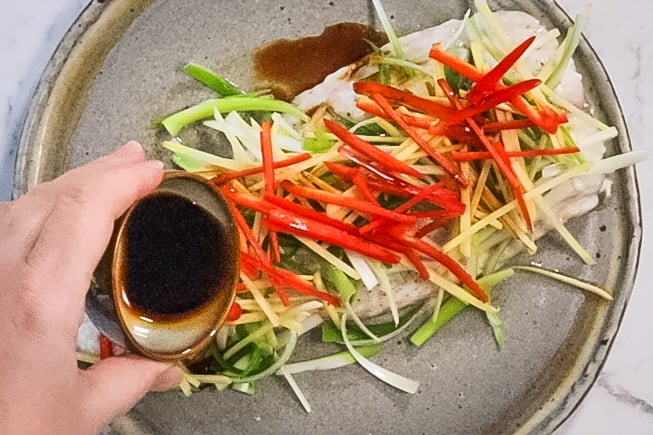
Why does this steamed fish recipe work so well in a steam oven?
Steaming is one of the gentlest ways to cook fish, and a steam oven makes it foolproof. The consistent temperature, gentle heat and constant humidity cook the fish evenly all the way through without drying it out, so you don’t need to babysit a pot of boiling water on the stovetop. Plus, it’s easier to fit multiple portions of fish into a steam oven than into most stovetop steamer baskets.
As an Amazon affiliate I earn from qualifying purchases. This post may also contain other affiliate links, which means I may earn a commission if you click through and make a purchase, at no additional cost to you.
Steamed fish recipe: ingredients and substitutions
See the recipe card further down for full method and ingredient quantities.
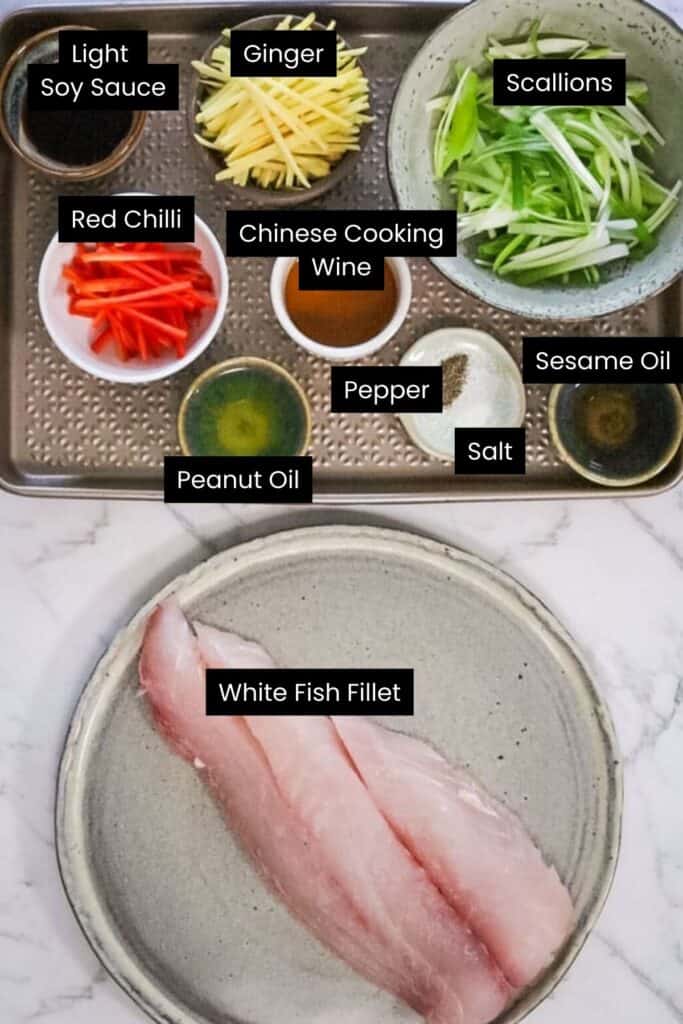
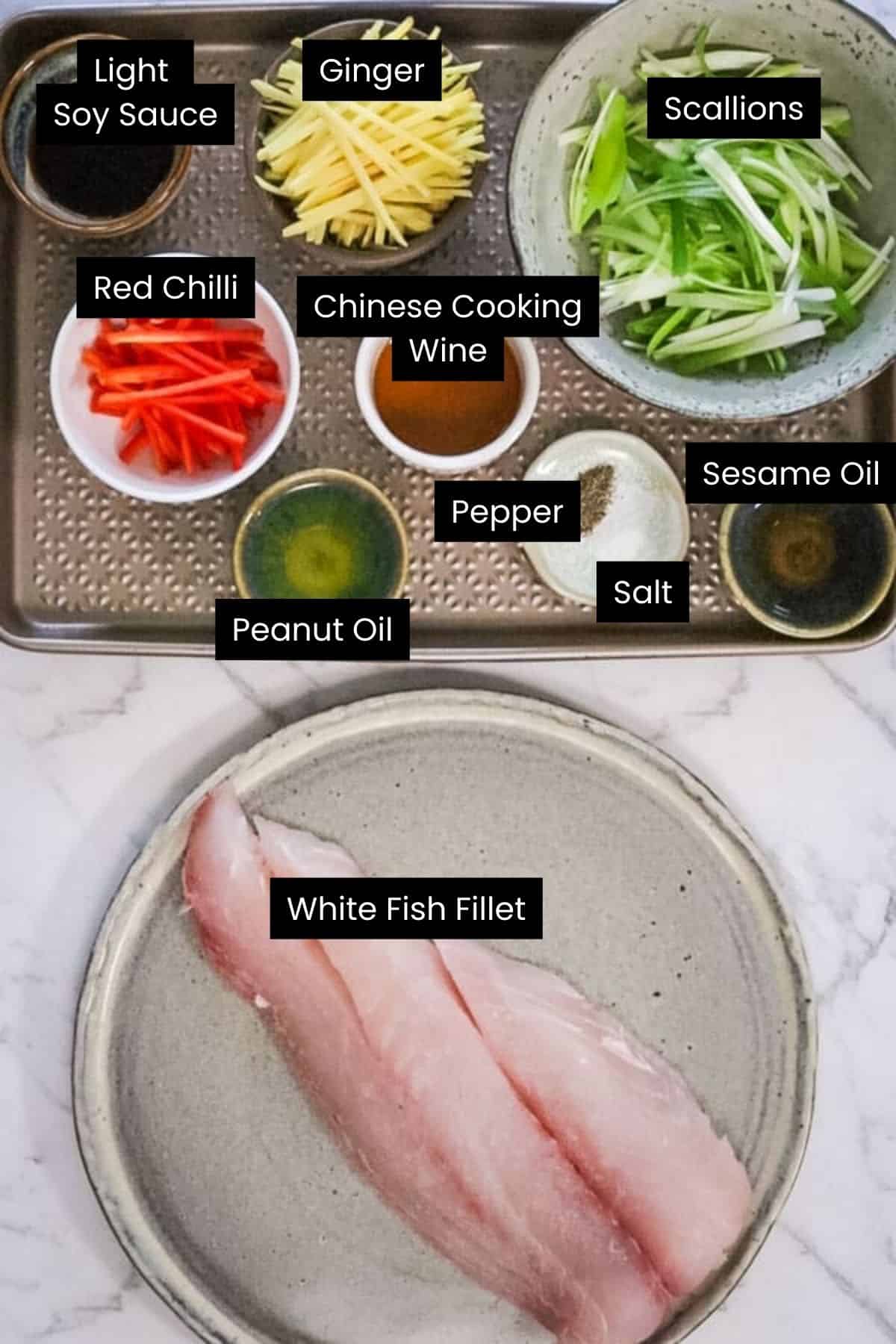
- White fish fillets: Mild, white fish works best here. Tilapia, cod, sea bass, hake and snapper are all great choices. You should look for fillets about 5/8″ (1.5cm) thick so they steam quickly and evenly.
- Chinese cooking wine: This adds a subtle depth of flavor and a little sweetness that matches the fish perfectly. Dry sherry is a good substitute if you don’t have Chinese cooking wine on hand.
- Scallions, ginger and chili: These fresh aromatics are the backbone of the dish. Cut them finely so they soften slightly and release their flavor when the hot oil is poured over.
- Peanut oil: Heated until very hot, this is what makes the aromatics sizzle and infuses the dish with flavor. Any neutral, high-heat oil works if you’d prefer to avoid peanut oil.
- Light soy sauce and sesame oil: Together these build the savory, umami-rich sauce that pools around the fish.
Steamed fish recipe variations
This recipe is easy to adapt once you’ve got the basic method down.
- Add a few thin slices of garlic along with the ginger for extra depth.
- Swap the chili for a bell pepper (capsicum), or leave it out entirely if you prefer a less spicy dish.
- Try the same method with a whole fish for a more dramatic presentation (see the recipe card notes for tips).
How to make steamed fish
View, save and print the recipe card further down in this post; read on for the visual walk-through.
For stovetop steaming, bring an inch of water to a boil in a steamer pot. For a steam oven, preheat using the steam setting. Warm serving plates while you wait so they’re ready the moment the fish is done.


Steam until the fish is opaque and just shy of being flaky, about 8-10 minutes depending on thickness. If you’d rather cook to temperature using a probe, go for an internal temperature of 130-135°F/54-57°C in the thickest part of the fillet.

Transfer the cooked fish to warmed plates and scatter with the scallions, ginger and chilli. Drizzle with soy sauce and sesame oil. Heat the peanut oil in a small pan until very hot (but not smoking) and pour it directly over the fish and aromatics. It will sizzle and smell amazing. And that’s it – ready to eat!
Tips for steaming success
Choose fish fillets that are all roughly the same thickness so they cook evenly and finish at the same time.
If your fish isn’t perfectly fresh, boat-frozen fillets (thawed in the fridge and patted dry) are a better bet than fillets that have been sitting unfrozen for several days.
Pour the hot oil over the aromatics right at the table if you can. It brings a bit of excitement and drama, and it makes the dish feel special.
Don’t walk away once the fish goes in to steam. The window between perfectly cooked and overcooked is narrow with delicate white fish.
Steamed fish serving suggestions
- Serve with steamed rice to soak up the savory sauce.
- Add a side of steamed Asian greens for a complete, balanced meal.
- This dish also works well as part of a larger spread alongside other steamed or stir-fried vegetables.
This steamed fish recipe proves that a healthy, restaurant-quality dinner doesn’t need to be complicated or time-consuming. Fifteen minutes from start to finish, and you’ve got a dish that ticks all of the boxes (or at least all of my boxes!). It’s one of those dinners that looks and tastes like it required a lot more effort than it did.
Spread the word
If you’ve made and enjoyed this recipe (or any others on the site!), would you leave a review and rating? Reviews are incredibly helpful to other cooks, and help me understand the sorts of content you enjoy or questions you have. You can rate and review any recipe by clicking the star icons at the top of the recipe card.

A Fast Steamed Fish Recipe with Ginger (15 minutes!)
Ingredients
- 4 5oz white fish fillets skinless, 5/8" (1.5cm) thick, or one 1lb 5oz (600g) fillet, of the same thickness as the smaller fillets 150g
- 1 Tbsp Chinese cooking wine or dry sherry
- 1/2 tsp fine salt
- 1/2 tsp black pepper
- 4 scallions green onions, finely julienned
- 2 inch piece fresh ginger peeled, finely julienned
- 1 red chilli deseeded, finely sliced
- 4 Tbsp peanut oil or other neutral flavored/vegetable oil
- 2 Tbsp light soy sauce
- 1 Tbsp sesame oil
Instructions
Set up steamer or preheat steam oven
- For stovetop steaming, fill the base of a steamer pot or saucepan with an inch of water and set on a cooktop to come to the boil. For steam oven, preheat using steam setting, 195°F/90°C (100% humidity). Warm serving plates so they're ready when the fish is cooked.
Season fish
- If you're steaming in a steam oven, place the fish on a lightweight stainless steel tray in a single layer. For a steamer basket, place the fish onto a heatproof plate which fits inside a bamboo or basket steamer. Mix the Chinese cooking wine, salt and pepper in a small bowl and drizzle the top of the fish with the mixture.4 5oz white fish fillets, 1 Tbsp Chinese cooking wine, 1/2 tsp fine salt, 1/2 tsp black pepper
Steam fish
- Steam the fish until it's opaque and just shy of being flaky. This should take no more than 8-10 minutes unless the fish is very thick. If you want to cook to temperature, the internal temperature should be 130-135°F/54-57°C in the thickest part of the fish filets.
Add aromatics and sizzling oil
- When it's cooked, remove the fish from the steam oven or steamer and transfer to warmed plates for serving. Scatter with the scallions, ginger and chili.4 scallions, 2 inch piece fresh ginger, 1 red chilli
- Heat peanut oil in a small pan over medium heat until it's very hot but not smoking. While the oil heats, drizzle the fish and aromatics with the soy sauce and sesame oil. When the peanut oil is hot, pour it over the fish and aromatics. It will sizzle and make the ginger, chilli and scallions smell amazing. I like to do this at the table for dramatic effect.4 Tbsp peanut oil, 2 Tbsp light soy sauce, 1 Tbsp sesame oil
- Serve immediately with steamed rice and, if you like, steamed Asian greens.
Notes
- Fish varieties: Look for mild, white fish fillets like tilapia, cod, sea bass, hake or snapper.
- Fish fillet size: Size is less important than the thickness of the fillets. Choose fish that’s about 5/8″ (1.5cm) thick so it steams fast and evenly. For individual servings you can use smaller, 5oz (140g) pieces, or cook one larger (but still thin) fillet that weighs 1lb 5oz (600g), cutting and serving it at the table.
- Fish Freshness: Steaming is a delicate cooking method and if your fish is a little old, you can’t disguise that as easily as if you grilled or baked it. If you don’t have access to same-day-caught fresh fish, choose boat-frozen fillets over older, unfrozen ones. Thaw frozen fillets in the fridge, then pat dry with paper towels before cooking.
- Want to use a whole fish? You can! You’ll need to increase the cooking time but otherwise the ingredients and method translate well. Take a look at my recipe for Whole Vietnamese Steamed Fish for some pointers on cooking and serving up a whole fish.
- Checking fish for doneness: When it’s perfectly steamed, the fish should be opaque and just barely flaky; if you prod it with a fork it’ll come apart but there’s a tiny bit of resistance. Fish continues cooking when you remove it from the heat so we’re aiming for just a tiny bit underdone. If you can’t flake the fish at all with a fork, it needs more cooking so you don’t end up with raw fish that’s got a chewy texture. If you don’t trust your eyes or the fork/flake test, use a thermometer to check the internal temperature. This is a little harder with thin fillets, but the center of the fish should read 130-135°F/54-57°C. Note this is lower than most governmental food guidelines! If you’re immunocompromised or pregnant, or cooking fish that’s less than perfectly fresh, it’s safer to go to 145°F/63°C to make sure any harmful bacteria are killed.