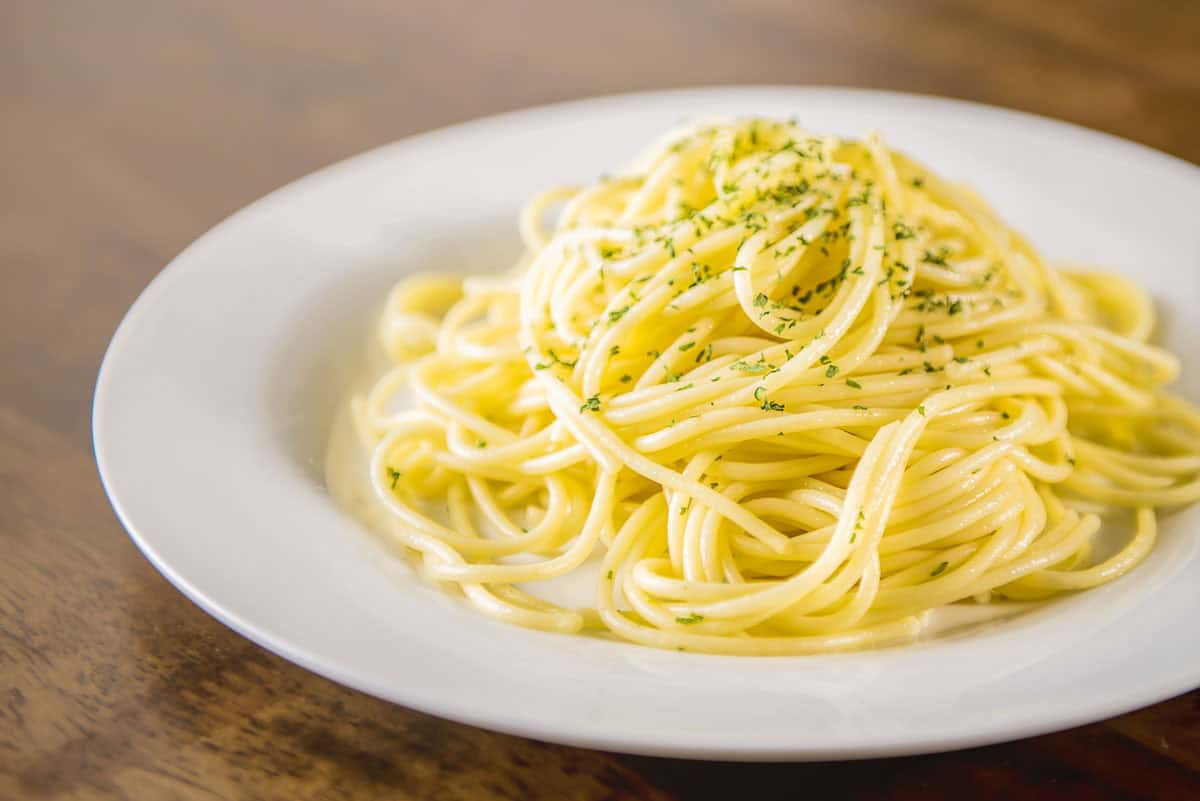

Did you know you can cook dried pasta in a steam oven using just water, salt and a shallow pan? Think of it as turning your steam oven into a hands-off saucepan!
Can you really ‘boil’ pasta in a steam oven?
Yep. Dried pasta will cook in hot, salted water in a steam oven, and you can drain or sauce it just as you would with stovetop pasta.
The main differences are:
- The pasta sits in a shallow pan instead of a deep pot.
- The water is held around boiling temperature by steam, rather than a rolling boil.
- You generally use less water, so the cooking liquid is starchier (this is the biggie; that extra starch is welcome in some pasta dishes but not in others).
Basic method for dried pasta in a steam oven
This approach works for most standard dried pasta shapes and any brand of steam or combi steam oven, as long as you have a full-steam (100°C/212°F and 100% humidity) provision in your oven settings.
- Preheat to full steam
Set your oven to Steam, 212°F/100°C and 100% humidity. - Get your pasta into the right pan
- Use a wide, shallow oven-safe pan or tray. This is my favorite pan for steam oven pasta.
- Add dried pasta in an even layer.
- Pour over very hot water until the pasta is just submerged, with about a half inch/1.5 cm extra water above.
- Salt the water as you normally would for pasta.
- Cook the pasta
- Put the pan into the preheated oven.
- As a starting point, take the packet time and add about 5 minutes.
- Begin checking a few minutes before that; taste and continue in short increments if needed.
- Finish and serve
- Drain the pasta, or lift it straight into your sauce.
- Use some of the starchy cooking water to loosen and bind the sauce, if you like.
Tips for the best success with dried pasta in a steam oven
- Shallow pans help the pasta cook more evenly.
- Moderate amounts of pasta work best (enough pasta for a household, not a huge catering batch, which can become gummy during cooking).
- Plain water and salt are all you need; the method is designed to mimic simple boiling. If you want more of an all-in-one meal with pasta, just search ‘pasta’ in the search bar at the top of the page here, and you’ll get my best steam oven pasta meals. 🙂
You can still apply my pasta cooking method if you change pasta shape or brand. Just adjust the time and amount of water based on what kind of pasta you’re cooking.
Pros of steam oven pasta
- Hands-off cooking: No watching a pot, no boil-overs, no stirring over the stove.
- Better use of your kitchen appliances: Frees up your cooktop for sauces or other dishes.
- Very useful cooking water: The smaller volume of water gives you nice, starchy liquid to help your sauce cling.
- Good for batch prep: You can cook a pan of pasta, drain then chill. Reheat gently using steam without drying it out.
Steam oven pasta cons and trade-offs
- Slightly different texture: The pasta can be a bit softer or more surface-starchy than from a big pot of fiercely boiling water.
- Less precise at first: You’ll likely need one or two trial runs to pin down the perfect timing in your own oven and with your own kitchenware.
- Shape sensitivity: Very thick or very tiny shapes are less forgiving; most everyday shapes – think spaghetti, linguine, penne or fusilli – are fine.
When you look at it as “boiling without the pot”, cooking dried pasta in a steam oven starts to feel very approachable. With a shallow pan, hot salted water and full steam, you can free up the stovetop, skip the boil-overs and still end up with a bowl of comforting, sauce-ready pasta. The first time is really just a timing experiment; once you’ve noted what works in your kitchen, it becomes an easy, repeatable method you can lean on for busy nights or anytime you want your oven to do more of the work.