

You are reading a paid Steam Oven Insiders member journal. Journals drop into your inbox on the 15th and 30th of each month.
Would you like to view all previous journals? You can find those in the journal archive.
Hello!
Happy (almost) Easter, everyone!
I’ve said it before, but I love cooking at Easter time. Any events are usually staggered out over the long weekend, so it’s less stressful than cooking for a singular big Christmas meal (or Thanksgiving, for those of you who do that). It’s often a weekend where I undertake some kind of extended baking project, because I have the time to devote to it. Perhaps you’re the same?
And that brings us to today’s croissant recipe, which is perhaps not conventionally Easter-y but is a great weekend project. A few journal issues back, I polled you to see who’d be interested in learning to make croissants from scratch in your steam ovens. Some of you prefer to buy your pastries without the fuss of attempting your own version at home, but lots of you – well over 70% – were keen! So here we are.
I’ve done the very hard job of baking multiple test batches of croissants, for which my family is grateful to all of you. I’ve distilled all those tests down into a VERY detailed recipe, so you should be able to turn out beautiful pastries on the first go. If you love freshly baked croissants, I really hope you’ll try these at least once. They are technical, and yes, a little finicky, but very achievable if you follow the directions. And I can’t overstate the satisfaction of turning your own kitchen into a French patisserie.
Elsewhere today, there are several suggestions below for yeast baking projects that are less time consuming than the croissants, and a lengthy discussion on Anova oven settings in the ask me anything section. Lots to read and think about and cook!
Happy Easter, happy steam oven cooking, see you in a couple of weeks.
Emily x
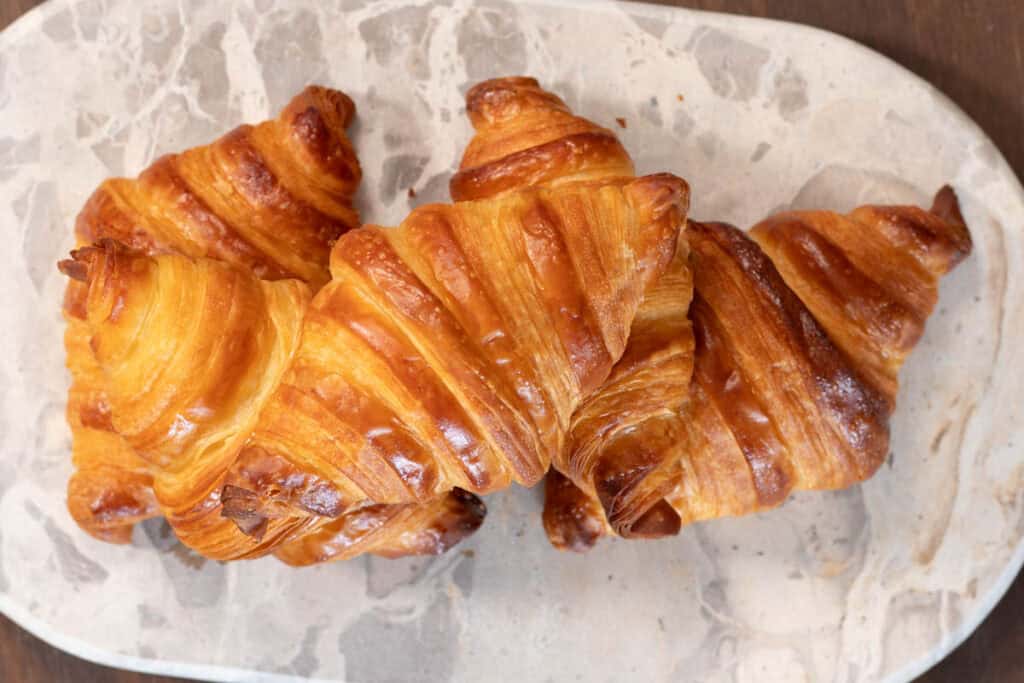
Croissants (from scratch, in your steam oven)
Croissants aren’t difficult to make, but they do take time, attention, and a bit of planning. This detailed recipe breaks the process down into manageable steps so you can create beautifully flaky pastries in your own kitchen. From butter selection and temperature to rolling technique, I’ll guide you through it. And when it comes to baking, your combi steam oven gives that golden, crisp finish and layered, ethereal interior that can be hard to achieve in a regular oven.
The Recipe Flip
I know, I know, not all of you have it in you to bake croissants. But perhaps you’d still like to try some kind of yeasted dough recipe for fun (and eating delight)? With that in mind, here are some of my favorite less-time-and-labor-intensive baking ideas for your Easter weekend and beyond.

I published these years ago, and they remain ever-popular and ever-fabulous. The fruity and plush buns are wildly better than any store bought alternative and they’ll be well worth your time to bake.

Hokkaido Milk Bread
Goodness I love this bread. It’s got an almost otherworldly softness, but with a tight enough structure that it slices, toasts and freezes perfectly. It feels luxurious and rich, but it’s not much more effort than baking a regular sandwich loaf.
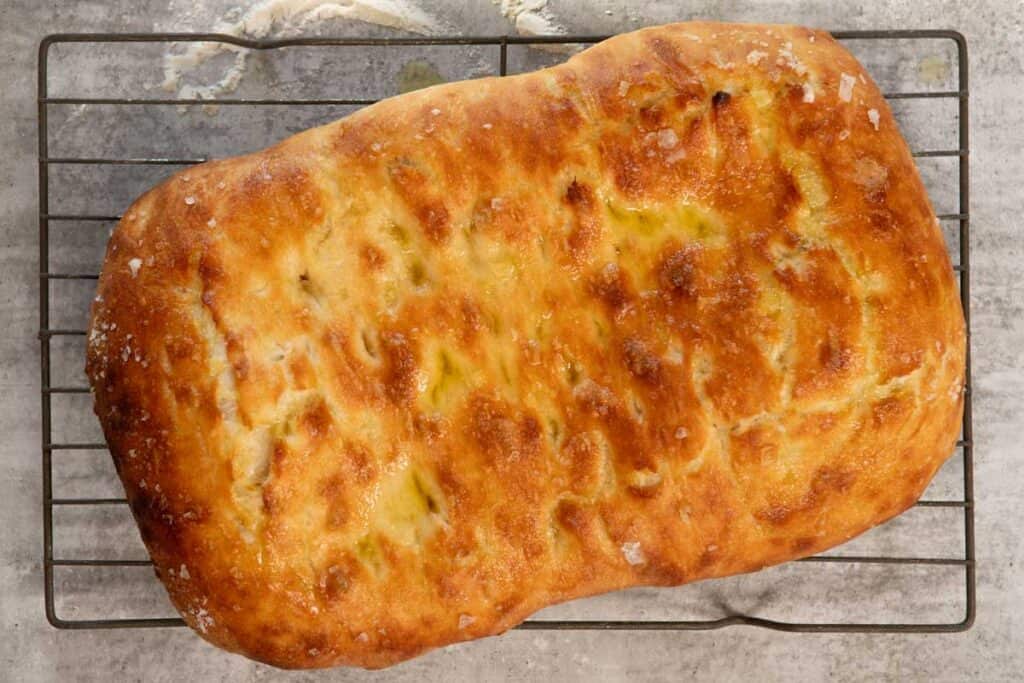
One of the easiest breads you can bake, focaccia is fun and forgiving, and you get the most glorious crusty outside, chewy/soft inside that’s great for fancy sandwiches or slicing and dipping.
Ask Me Anything (AMA)
Here’s your opportunity to ask me anything you like related to combi steam cooking!
I encourage you to submit questions, and do my best to answer as many as possible. I cannot always get to every single question, but I carefully curate ones which are relevant and represent a variety of topics. We all learn from each other, and I often learn new things based on questions from all of you!
If you have an AMA question, please email it to emily@steamandbake.com. Make sure you include the phrase INSIDERS AMA in the subject line so I can collate and read all your submissions.
From Sue
Q: Until I saw your response to Barbara’s question [about how to cook souffle in a steam oven], it had not occurred to me to cook soufflés using steam or combisteam (I have a VZUG).
I cook savoury and sweet souffles regularly in my standard oven on hot air, and I also cook fruit souffles (egg white only) from frozen (as per Stephanie Alexander).
Is your experience that the combisteam is good for them all, following your advice on time/temp in your response to Barbara?
I could experiment, but I thought you may know and other subscribers may be interested.
A: I’ve done plenty of flour-based souffles over the years, but I don’t think I’ve ever done a fruit-based egg white souffle, so I can’t speak specifically to that. What I can say is that every souffle I’ve tried using combi steam settings has worked well. The thing to be careful of is too much steam! That might sound ridiculous, but I’ve found sometimes with a very high proportion of steam, the souffle will puff dramatically and fast in the oven, then completely collapse on itself. Like I said in my response to Barbara a few weeks ago, I’d go for something more like 50%/medium steam across the board – enough to help with the rising, but not overkill. I would love to hear if you try it with your frozen fruit souffles! I might have to pull out my big Stephanie Alexander book and give one a try. 😉
From Andrea
Q: Your recipes always include cooking temp and steam settings and I can typically infer whether or not sous vide mode should be used. That part is great. However, I am having trouble converting many of your recipes to my Anova because I have to guess what settings to use for Heating element (Top, Rear, Bottom, combo) and possibly fan speed depending on Heating element setting. It generally defaults to Rear but this may not be correct. I also have to guess what shelf to use. Any general rules of thumb or assumptions you can suggest?
This issue comes up more and more with more complex protein and veg dishes. I find I have to take the time to locate a similar recipe on the Anova site but many times the settings chosen by them are remarkably dissimilar to yours and I am hitting a wall.
A: This is a brilliant question, and I know lots of Anova-owning Insiders will also be keen to hear the response.
The answer kind of depends on how granular you want to get with your cooking precision. Anova’s brand and products are literally built on the ability to be VERY precise with your appliance settings, and that’s great for some foods. But (and this might be controversial!) for a great many dishes where we’re using combi steam to roast/bake foods (so not sous vide), you’ve got quite a lot of flexibility in how you decide to cook, in order to achieve a similar outcome.
This might be why you see differences in settings I specify vs ones other recipes specify in the Anova app. Remember that our aims in recipe development are different: I am always focused on giving you a really approachable recipe that gets great and consistent results, but with the least possible amount of fussing around. Anova’s aim is to highlight the many features and functions of the appliance. It’s not at all a bad thing, we’re just coming from different places. Some of the recipes in their offerings will be specifically designed to highlight the different heating elements, fan speeds or perhaps another setting on their ovens, but they could likely also be cooked in a more simplistic way.
I know that’s not super helpful, but this might be: if you want to keep things very simple with your Anova oven, you can get away with using the (default) rear element/fan setting for almost everything you cook. I test almost every recipe I publish in an Anova oven as I have one in my work studio, and I really only deviate from the rear/fan if I need to add extra browning to the top of a dish. There are use cases for the other heating elements (say, if you blind bake pastry, perhaps you want to use the bottom element only), but think of them as additional extras, not everyday necessities. Same goes for fan speed. Leave it on the default, unless you need to cook something where you’re directly instructed to change it. The adjustable fan speed is something I have never seen in any other oven, and it’s cool but I personally find it unnecessary.
As for the question around which shelf to use, here’s a rule of thumb I learnt when I first began as an appliance demonstrator many years ago. It’s served me very well, and it runs true for both regular oven and combi steam cooking. It’s this: in a fan-forced or convection oven, place your food on the lowest shelf if you’re only cooking one item. If you’re cooking on two shelves, the larger or bulkier food goes on the bottom, and the smaller or lighter food goes 1-2 shelves above, depending on how tall the lower item is. This is not a perfect system, but it’s a great way to think about how you load up your oven so the fan can circulate hot air around your food in the most efficient way possible.
I hope the lengthy answer helps; happy to have any follow up questions on this as it’s a bit of a nuanced thing!